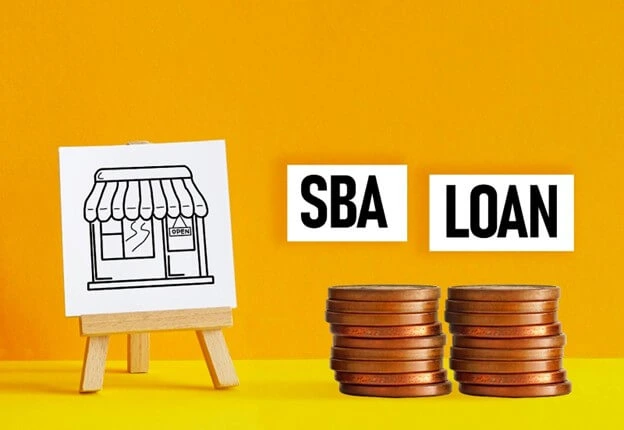
Business owners looking to make financing decisions need clarity about price, and for many, that means paying attention to SBA loan rates. For the last several years, these rates have moved from extremely low, post-COVID-19 levels and headed into a higher, more volatile range influenced by Treasury yields and Federal Reserve policies. Knowing where rates have been and where they may go provides a competitive advantage for business owners as they plan toward 2026.
A Quick Historical Snapshot
The rates of long-term borrowings were relatively low from 2019 to 2021. The 10-Year Treasury rate remained in a range of yields that made SBA 504 loans very competitive and created conducive market rates favoring long-term investment. When the economy started to recover from the effects of the pandemic, there was an increase in inflation; consequently, from 2022, the Fed started to aggressively tighten monetary policy.
As a result, SBA loan rates rose progressively. Eventually, in 2023 and 2024, rate increases were evident for both 7(a) and 504 loan programs. In truth, it became common to observe SBA 504 loan rates of 6% and above for 20- and 25-year loans in 2024. This represents quite a deviation from what had been observed just a few years ago, which fell between 2% and 4% rates.
The SBA 7(a) loans were not impacted in the same way because seven out of ten 7(a) loans have always been variable-rate loans. The rates for these loans change based on changes in the prime rate and market spreads. Due to their variability, SBA loan rates for 7(a) borrowers increased even faster than 504 loan rates in situations where there were rapid increases in policy rates.
Reasons for Increases — The Primary Factors
Three primary forces drove SBA loan rates up over the past few years:
- Increasing Treasury Yields: The 10-year Treasury is one of the most important benchmarks for SBA 504 loan pricing. SBA 504 fixed rates rose as yields moved higher.
- Federal Rate Increases and Inflation: The Federal Reserve’s actions to address inflation resulted in several increases in short-term interest rates. An increase in interest rates for variable-rate SBA 7(a) loans naturally follows.
- Lender Pricing Changes: After the pandemic, lenders modified their risk assessments by changing spreads on their loans, as well as tightening up their underwriting, which resulted in higher pricing in some cases.
What Trends Project for 2026
While nobody can accurately foresee what will happen in the future, history provides clues as to what to expect. While it is likely that Treasury yields will remain high compared to their level prior to the pandemic, but not necessarily keep climbing at such a sharp rate, it’s tough to make general forecasting calls.
It thus provides a likely situation whereby SBA loan rates will stabilize moderately instead of declining significantly. A business should not expect to find itself in the highly favorable rate environment seen from 2020 to 2021. The year 2026 may present lower yet stabilized loan rates if indications of a balanced economy and controlled inflation persist.
In other words, “the year 2026 may mark ‘a new normal,’ in which SBA loan rates may find their middle ground not overly high but certainly not historically low.” Moreover, such a stabilized rate environment would prove to be decidedly helpful to business owners.
Practical Takeaways for Business Owners
Here are a few strategic tips for small-business owners preparing for 2026:
- Expect moderate rates: Planning for 2026 is best done conservatively rather than banking on a major drop off in light of 504 rates over 6% in 2024.
- Lock fixed rates when you can: A 504 will be a stable, numerous fixed rate that will avoid popular fluctuation in rates moving forward.
- Get ready for possible variable 7(a) changes: Budget accordingly for 7(a) loans when estimating a payment, knowing rates can adjust.
- See what else lenders offer: Lenders have different terms for a reason! Looking into the best SBA lenders can help with that.
- Timing can be important: Inquiring as to whether market loans are sensitive to tactics or waiting for those to stabilize and get busy.
Choosing the Right SBA Loan Matters
Do not forget that SBA business loans do not have to be one-size-fits-all solutions. The 504 loan program is still great for long-term lending involving property or equipment, while there’s flexibility in 7(a). Getting the correct loan may sometimes be just as big a deal as monitoring SBA loan rates.
Conclusion
With the arrival of 2026, the atmosphere that is going to be influenced by stable yet higher benchmark yields and quite SBA loan rates should be anticipated by the owners of small businesses. It may still be the case that the cost of borrowing will not go back to the very low levels of the first half of the 2020s, but the next years could be characterized by more stability, thus providing business owners with the insight necessary for making their plans, investing, and growing with confidence.
About the Author