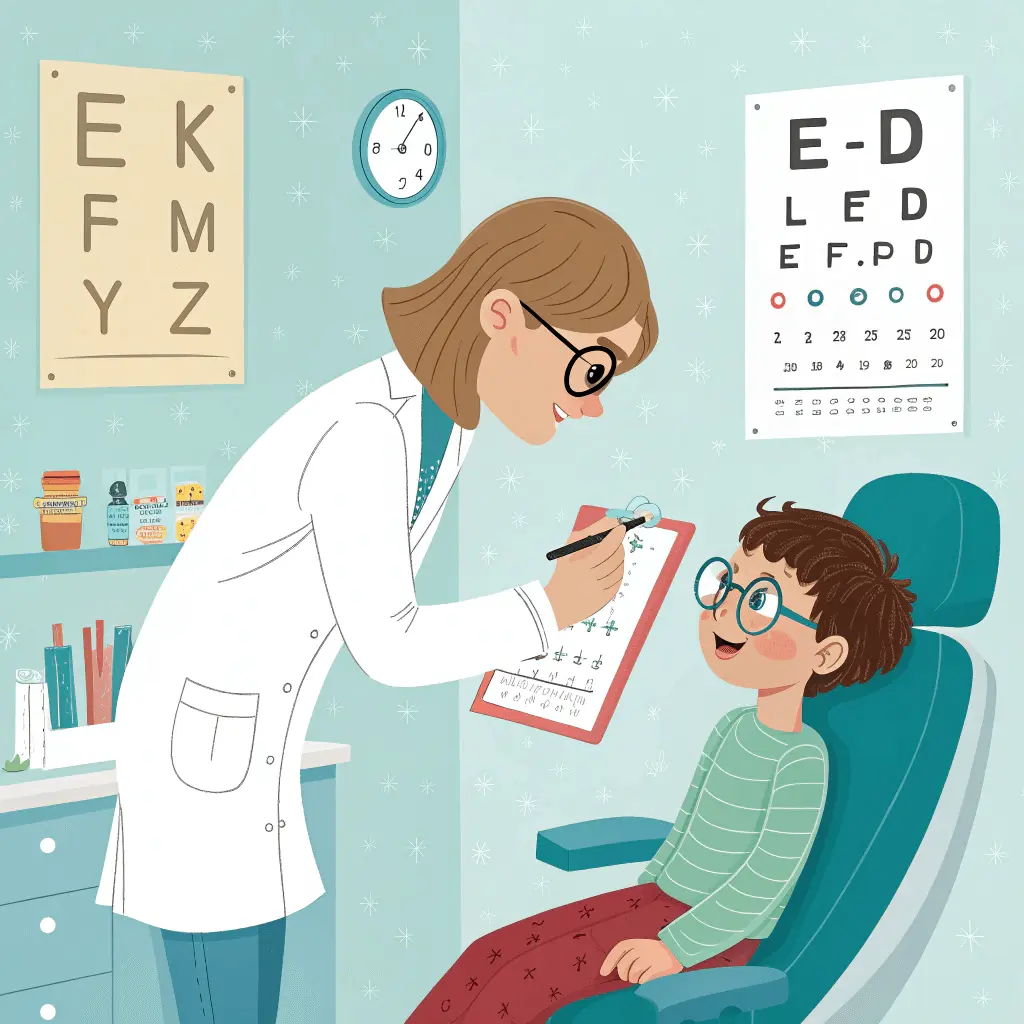
Life with children is a whirlwind of lost socks, homework battles, and endless snack requests. When you are juggling the school run, extracurricular clubs, and just trying to get a decent dinner on the table, it is easy to let certain health checks slide, especially if there are no obvious complaints. If your child isn’t squinting at the television or bumping into doorframes, you naturally assume their vision is perfect.
However, excellent sight is about much more than just not needing glasses. Regular visits to the optician are a crucial part of a child’s overall development, often picking up on issues that have nothing to do with blurriness.
Children Don’t Know What They Can’t See
One of the biggest reasons to book that appointment is simple: children rarely complain about their eyesight. Why would they? For a child, their vision is their normal. If the leaves on trees have always looked like undefined green blobs rather than distinct shapes, they assume that is how everyone sees them. They won’t tell you the whiteboard is fuzzy because they think it’s fuzzy for the rest of the class, too.
Instead of verbal complaints, you might see behavioural changes. A child might become frustrated with reading, complain of headaches after school, or seem clumsy on the playground. Regular exams remove the guesswork, ensuring that a hidden struggle with vision isn’t mistaken for a lack of ability or attention in the classroom.
Supporting Every Child’s Potential
For parents and foster carers alike, these appointments are a safety net. If you have just started fostering in Liverpool, for example, you might not have a complete medical history for them. They may have missed early developmental checks, meaning minor issues could have gone unnoticed for years.
Taking a foster child for an eye exam is a great way to show them they are cared for and valued. It establishes a routine of self-care. While NHS eye tests are free for children in full-time education, your fostering allowance is there to support the wider well-being of the child. You can use it to cover travel costs or perhaps to make the trip a special outing, grabbing a treat afterwards to make the experience positive and reassuring.
More Than Just 20/20 Vision
An eye exam checks the health of the eye, not just the focus. The optician looks at how the eyes work together as a team. Good binocular vision is essential for depth perception, which impacts everything from catching a ball to pouring a drink without spilling it.
Issues like a “lazy eye” (amblyopia) are often completely treatable if caught young, but they become much harder to correct as a child grows older. By sticking to a schedule of tests which are usually every two years, or as recommended, you are protecting their future health.
A Simple Step for Peace of Mind
Booking an eye exam is one of the easiest wins available to you as a caregiver. It is non-invasive, usually pain-free, and gives you definitive answers. Whether you are a biological parent or a dedicated foster carer, ensuring the children in your care can see the world clearly is a wonderful gift. It removes invisible barriers to their learning and helps them engage fully with the world around them.
About the Author